
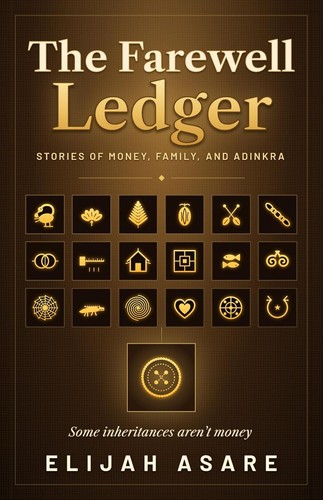
The Farewell Ledger
Stories of Money, Family, and Adinkra
by Elijah Asare
Why we picked it
A strong pick for readers who like fiction with practical value. Its family-centered storytelling and clear money lessons make personal finance feel approachable and meaningful.
About this book
After the death of her aunt Adwoa in Kumasi, Abena Kwarteng returns to an unexpected inheritance. A hospital billing clerk living in Worcester, Massachusetts, she does not receive cash. What comes to her instead is an adinkra cloth marked with eighteen symbols, a box of handwritten account books, and a single instruction: open one story each month and never jump forward.
As Abena follows the sequence, each symbol unlocks a new tale whose insight shapes a practical choice about money in her own life. Framed as eighteen interconnected stories, the book blends Ghanaian family life and Akan proverb traditions with accessible guidance. At the end of every chapter, "On the Ledger" draws out clear lessons on topics such as saving for emergencies, managing debt, budgeting, insurance, fraud, wills, and building financial independence.
3 things you’ll take away
- Shows money lessons through linked family stories and monthly reading.
- Explains saving, debt, budgeting, and fraud in clear, practical ways.
- Blends Ghanaian family life with accessible financial guidance.
Is it for me?
Details
- Author
- Elijah Asare
- Genre
- Business & Money
- Published
- October 1, 2026
- Publisher
- Independently published
- ISBN
- 9798178233283